



































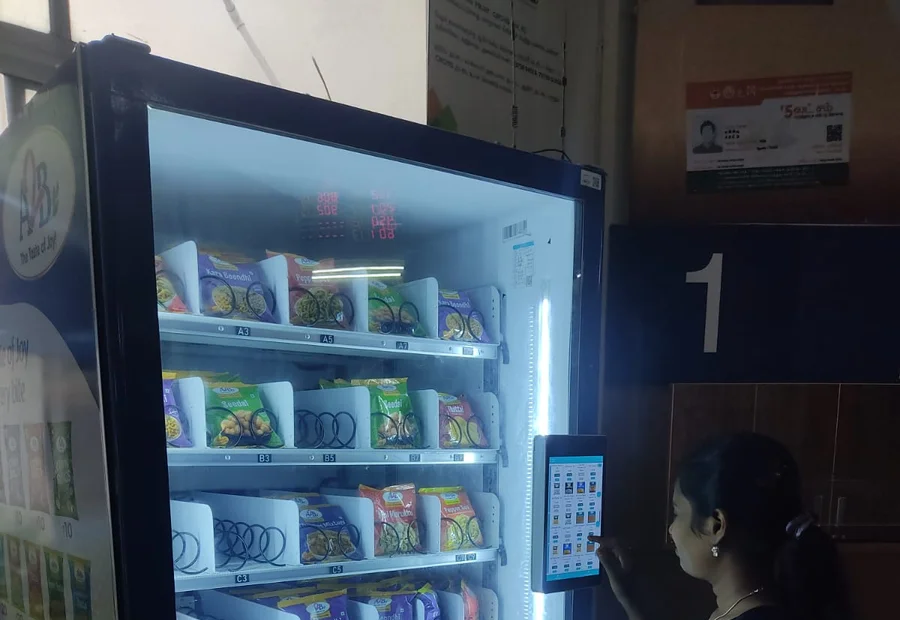
TL;DR: In vending, the phone rings exactly when a customer is standing in front of a broken machine and wants to report it right now, not tomorrow. The technician is usually already on the way to the next location or fixing another unit — and can't answer. The AI Voice Assistant takes the first call: collects the city, address, and machine number, notes the fault, and sends urgent reports (a machine completely down, money stuck inside) instantly as an alert — by email and to the technician's mobile app if they happen to be online.
Why the vending industry loses the most to missed calls
A company running dozens of machines across different locations simply can't keep someone permanently by the phone — the owner or one or two technicians are constantly out in the field: restocking, repairing, installing a new unit. When a customer calls to report a problem and nobody answers, they usually just give up — the machine stays out of order for days, and the company loses both the revenue from that unit and the trust of the customer who was standing right in front of it.
What the AI Assistant actually does with a fault report
The bot answers immediately, introduces itself, and asks how it can help. For typical vending reports:
- Machine didn't dispense the product — the assistant collects the city, exact address/location, and machine number (usually visible on the unit), and if the customer paid and wants a refund, it records the amount too.
- Payment problem — card reader not working, machine won't accept coins or bills — the assistant notes the fault exactly as the caller describes it.
- Physical damage — cracked glass, jammed mechanism, leak — the report goes to the service team with the description attached.
- General questions — where the nearest machines of a given brand are, what products they carry, how to file a complaint — if that information is in the knowledge base, the assistant answers right away.
A customer standing at a broken machine doesn't wait until tomorrow — they call once, and if nobody answers, they usually won't try again.
Alert situations — priority for serious failures
Not every fault is equally urgent. The alert situations system lets you define which reports should trigger an immediate notification — for example, a machine that doesn't respond at all, money trapped inside, or damage that could be a hazard to the customer. That alert goes out instantly by email and, if the technician has the mobile app open at that moment, as a phone notification — before the call has even ended.
Who handles transferred calls
If a customer insists on speaking to a human — for example over a disputed refund — the assistant can transfer the call live to the mobile app of the designated person. Companies with several technicians can assign different phones to different regions or report types, so the notification always reaches the person closest to that location.
A knowledge base shaped by your machine fleet
The most common mistake when starting out is trying to describe every possible scenario in advance. It works better to start with the basics — served cities, machine types, general refund rules — and let the system flag knowledge gaps that actually come up in real conversations. The assistant never guesses an answer it doesn't know — it honestly admits the gap and flags the topic for you to fill in from the panel.
Booking a service visit — optional
Some vending companies want to schedule a repair or replacement visit right away — the built-in calendar handles that, and it can also be synced with the technician's Google Calendar so new visits show up directly in their real schedule. Other companies prefer the assistant to just take the report and let a dispatcher order the repairs manually — both approaches are fully configurable.
Serving customers in more than one language
Vending machines often sit in border regions or serve a multilingual customer base. The assistant can run the entire conversation in the selected language (Polish, English, and Bulgarian are available today, with more languages in the works) — callers don't have to struggle with an unfamiliar language just to report a simple fault.
What to avoid when rolling this out in vending
Don't try to cover every single machine model separately from day one. A more effective start is a single, universal report-collection flow (location, machine number, fault description, contact) — the technical detail of exactly which mechanism jammed usually gets diagnosed on site anyway; the assistant just needs a well-described problem, not a diagnosis.
What it costs
The AI Voice Assistant comes in two plans. Standard — €23/month (PLN 99, 1,000 call minutes included, overage billed per minute), with 6-month and 12-month options at a discount. Premium — €46/month (PLN 199), unlimited minutes, useful with a larger machine fleet and unpredictable call volume; 6-month and 12-month options also available. A phone number is included in both plans. Pay once (card) or subscribe for automatic renewal — the client decides, with no long-term contract required.
FAQ
Will the AI Assistant replace a field technician?
No — the assistant takes and organizes the report, and a human still does the repair. The goal is that no report is ever lost to an unanswered call, and that the technician gets a complete picture (location, machine number, description) instead of a rushed note or no information at all.
Does the assistant need to know every machine number in advance?
No — it simply asks the caller for it, the same way a human answering the phone would. The number is usually visible on the unit itself.
What if a customer wants a refund?
The assistant collects the report details (including the amount, if the customer provides it) and passes it along — the refund decision is still made by the company according to its own policy, not by the assistant.
Can one number handle reports across several cities or regions?
Yes — on the Premium plan you can assign different technicians to different locations or report types, with routing to the right person.
How long does setup take?
Basic setup takes about 10 minutes — see the step-by-step guide. Number activation with the carrier usually adds one business day.
Want to hear how an AI Assistant would sound for your vending company? Sign up and try it free.
Hear what your own Assistant would sound like
Create a free account, configure your assistant in a few minutes, and test it on your own number — no commitment.
Sign up for free Book a consultation